

Apply to Flatbed/Specialized Owner Operator Driver Jobs
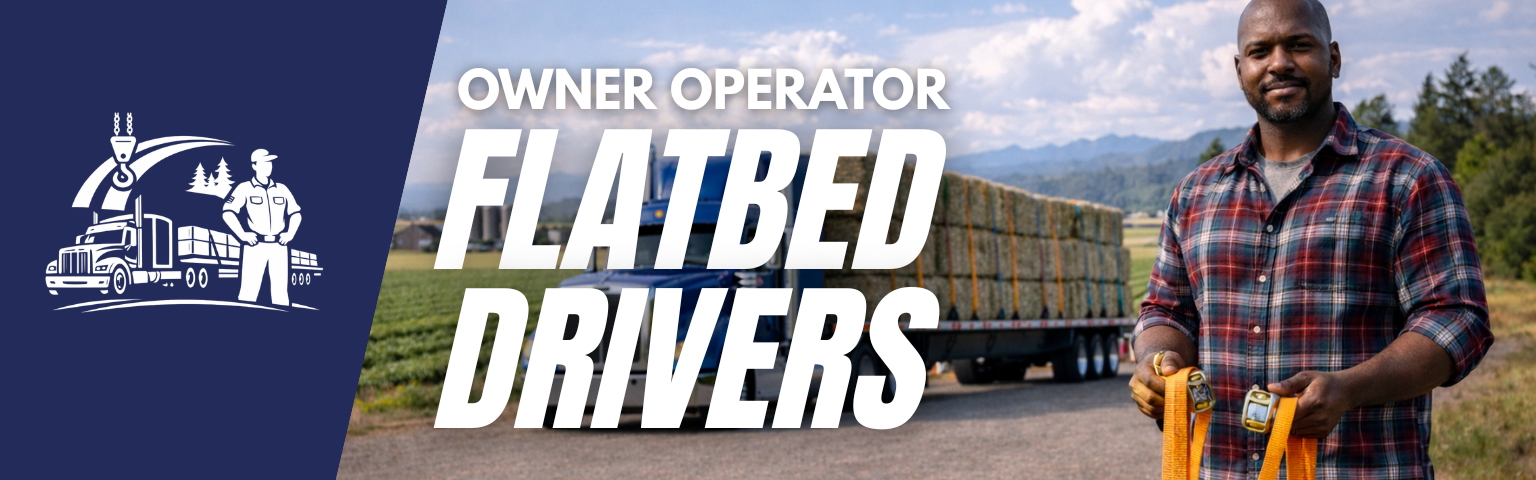

Specialized flatbed work is not a side hustle. Oversized, heavy haul, RGN, step deck, steel trains, and construction equipment freight are all higher pay niches that carriers use to move complex, high-value loads. Industry data and carrier hiring patterns show that carriers pay more for these runs because they bring extra risk, more planning, and often require permits, escorts, and tighter routing.
Veteran flatbed drivers are already in a strong spot. Years of running flatbeds, managing varied freight, and handling long-haul conditions are exactly the traits carriers look for.
What skills do you need to sharpen
To move into oversize and heavy haul, you do not need to start over; you need to sharpen what you already do. Carriers want drivers who can securely handle steel coils, beams, machinery, and oversized equipment using chains, binders, and custom cradles instead of guessing. They also want real experience with RGNs and step decks, because those trailers are common in oversize and heavy haul operations.
Strong load planning and center of gravity awareness matter. That means reading load diagrams, understanding how weight sits on the deck, and knowing how high is too high for overpasses and bridges. Oversize and heavy haul carriers treat this as core safety, not optional, and they often list it directly in job descriptions and training.
Comfort with route planning and permit awareness is just as important. Using routing apps, checking bridge and tunnel clearances, and understanding that state-by-state permit rules can change quickly, lets you run these lanes without constant hand-holding from dispatch.
Endorsements and training that matter
Endorsements are not just “nice to have” when you want oversize or heavy haul. Carriers use them as filters in hiring and dispatch. The doubles/triples (T) endorsement is often required for many oversize configurations, and some states list it explicitly in their heavy haul and oversize rules.
State-specific heavy haul or oversize credentials can make a difference. Some states require additional permits or documentation for drivers moving permit-level loads, and carriers that run these lanes often favor drivers who already hold those credentials.
Voluntary training and safety programs in heavy haul methodology, wide load compliance, and load securement are also highly valued. Carriers frequently mention these programs in job postings and training materials because they reduce loss, damage, and delays.
How to talk like a specialized driver
If you just post “flatbed driver” and wonder why you never see oversize jobs, you are not talking the way specialized carriers think. Update your carrier profiles and job board resumes to include phrases like “flatbed with RGN and step deck experience,” “comfortable with steel coils and machinery,” and “experience with oversize and heavy haul type loads.”
When you search for “flatbed jobs near me,” “flatbed jobs,” and “flatbed CDL jobs,” add modifiers such as “oversize,” “heavy haul,” “RGN,” “step deck,” or “permitted loads.” Carrier run job pages, and third-party boards already group these postings separately, and adding those keywords helps you cut through the noise.
Target “companies hiring flatbed drivers” that explicitly advertise oversize, heavy haul, or specialized flatbed lanes. These carriers usually list that detail on their driver careers pages and in their job descriptions. When you apply, highlight your years of flatbed service, the types of oversize adjacent freight you have hauled, and any endorsements or training that match the posting.
A step-by-step plan that fits your current job
Here is a practical way veteran drivers can move from regular flatbed to specialized runs without walking out on their current carrier. First, keep your current flatbed job, but ask your dispatcher for more steel, machinery, RGN, and step deck runs. These lanes become your proof of experience when you apply for flatbed jobs that focus on oversize or heavy haul.
Second, get the right endorsements and training, such as doubles/triples and any state-specific heavy haul or oversize requirements. Many carriers offer reimbursement or partial coverage for this training if you sign a short-term agreement.
Third, build a one-page summary that lists your flatbed experience, the types of oversize adjacent freight you have hauled, and any endorsements or training. Use that when applying for “companies hiring flatbed drivers” that advertise oversize or heavy haul lanes.
Fourth, when you land a specialized job, start with lower-weight, more common oversize loads such as construction equipment or standard steel beams before pushing for the biggest permit level moves. This matches how carriers and brokers actually train drivers on heavy haul and oversize runs.
Why this move usually pays more
Moving into specialized flatbed work usually pays more because carriers pay a premium for complex, high-value freight. Pay and salary data from industry guides show that drivers in oversize, heavy haul, and other specialized flatbed roles often earn more per mile or per load than standard flatbed runs, especially when they include securement pay, permit pay, and stop pay for tight setups.
As infrastructure and renewable energy projects grow, demand for oversize and heavy haul flatbed drivers is expected to stay strong. That improves long-term job security for drivers who invest in those skills instead of cycling through the same standard postings.
How to actually upgrade your flatbed career
If you are a veteran flatbed driver who feels stuck in the same cycle of loads and pay bands, this is how you turn your current flatbed time into a real upgrade. Use your existing experience as leverage, sharpen your securement and planning skills, add key endorsements, and start targeting “flatbed jobs near me,” “flatbed jobs,” and “flatbed CDL jobs” from “companies hiring flatbed drivers” that actually fit the niche you want. That is how veteran flatbed drivers can position themselves for specialized jobs and keep their pay and schedule working for them instead of the other way around.
Flatbed drivers work long hours securing irregular loads in rain, wind, and darkness. Falls from trailer heights and cargo shifts create real risks that can wipe out your week and your paycheck. Good gear tackles these problems directly while cutting time at every dock or shipper.
Federal safety records show 4,587 securement violations yearly, most tied to injuries that proper equipment prevents. Flatbed jobs demand full compliance with 49 CFR 393 standards for every load. These tools deliver proven results that keep you hauling steady.
Ladders and Boots for Safe Deck Access
Falls account for 32% of trucker injuries per Bureau of Labor Statistics data. Flatbed haulers face constant exposure to climbing uneven freight without a stable footing at the shippers’.
A telescoping aluminum ladder rated 375 pounds gives wide rungs and grip feet for secure footing on every climb. It eliminates jumping or stretching to reach tarp edges. Composite toe boots with slip-resistant soles and ankle support grip wet decks where regular shoes fail.
You complete pre-trip inspections faster while avoiding sprains that bench good drivers.
Edge Protectors and Tarps That Hold Through Wind
Sharp freight corners wear through straps fast, causing cargo movement linked to 1,200 crashes annually. Roadside inspections catch these failures and hurt your safety score.
Rubber edge protectors rated 3,000 pounds working load wrap corners to distribute tension evenly. They preserve full strap strength through long runs. Heavy-duty vinyl tarps with D-rings every 18 inches cover completely while allowing airflow against moisture buildup.
This setup withstands 40-mile-per-hour crosswinds so you roll without emergency repacks.
Headlamps and Deck Lights for Night Checks
Regulations require securement checks every three hours or 150 miles, but darkness hides slack that leads to rollovers. Late shippers make visibility essential.
A 600-lumen rechargeable LED headlamp works hands-free with adjustable beams to spot chain wear clearly. Magnetic clip-on deck lights cover the full trailer footprint fast. Class 2 reflective vests with complete strips keep forklifts and traffic from missing you.
You verify everything in 90 seconds, even after sunset, staying fully compliant.
Maintenance That Keeps Gear Reliable
Worn equipment doubles violation risks during audits and stops. Simple care makes quality tools last through hundreds of loads.
Inspect straps for frays, test ladder hinges, and check tarp seams before every trip. Air out wet coverings after hauls and store everything dry. Replace edge protectors after 40 loads or visible wear.
Drivers who maintain like professionals collect clean inspections and stay working.
Search “flatbed jobs near me,” “flatbed jobs,” “flatbed cdl jobs,” “flatbed companies near me,” and “companies hiring flatbed drivers” on Truckdriversus.com to find carriers valuing equipped haulers.
Flatbed drivers face constant pressure to secure loads that pass DOT inspections the first time, every time.
Whether you’re already running flatbed loads or just exploring flatbed jobs near me, having the right equipment is not optional. It directly affects your safety, your paycheck, and your reputation on the road.
2-inch synthetic webbing straps rated at 40,000 pounds minimum break strength outperform steel chain in 92% of securement inspections while weighing about 60% less.
For drivers working in flatbed CDL jobs or researching companies hiring flatbed drivers, this is the kind of detail that separates experienced drivers from rookies.
Strap Performance Comparison
| Strap Type | Minimum Break Strength | Weight Advantage | DOT Inspection Pass Rate |
|---|---|---|---|
| 2″ Synthetic Webbing | 40,000 lb | 85% lighter than chain | 92% |
| Grade 70 Chain | 47,000 lb | Baseline weight | 78% |
| 4″ Heavy Duty Webbing | 67,000 lb | 2x heavier than 2″ straps | 88% |
Wider 4-inch straps are better suited for extremely heavy equipment over 25,000 pounds. For most standard flatbed freight under 10,000 pounds, 2-inch webbing meets FMCSA requirements while keeping things lighter and easier to handle.
Drivers searching for flatbed jobs or comparing flatbed companies near me will quickly notice that most fleets standardize around these straps for everyday loads.
Why Synthetic Webbing Wins Flatbed Work
Lumber, steel coil, and construction materials all behave differently in transit.
Synthetic straps conform better than rigid chains, helping prevent cargo damage caused by vibration. Polyester webbing also resists moisture and UV exposure, which can weaken other materials over time.
For drivers in flatbed CDL jobs, this means:
Better load protection
Easier handling
Faster securement
That combination matters when you’re trying to stay efficient and avoid rework at inspection points.
Flatbed Securement Basics Every Driver Should Know
FMCSA requires:
One tie-down for every 10 feet of cargo
Or at least one tie-down per 1,100 pounds
Four 2-inch straps with proper working load limits can easily secure a 10-foot steel load over 5,000 pounds when positioned correctly.
This is the standard most companies hiring flatbed drivers expect you to understand before you ever hit the road.
Step-by-Step Flatbed Strap Securement
Follow this process to keep your load tight and inspection-ready:
Position cargo evenly with balanced weight
Secure front and rear tie-downs first at proper angles
Add side straps to prevent shifting
Tighten ratchets to proper working load limits
Perform a brake test and recheck tension
Drivers who follow this consistently see much higher inspection pass rates and fewer violations.
Load Securement Requirements by Weight
| Cargo Weight Range | Minimum Straps Required | Pattern Recommendation |
|---|---|---|
| Under 1,100 lb | 1 strap | Front-to-rear |
| 1,100–10,000 lb | 2–4 straps | Front and rear blocking |
| Over 10,000 lb | 4+ straps | X-pattern with side support |
Knowing these basics is essential whether you’re already working or just looking at flatbed jobs near me and trying to break into this side of trucking.
Why Equipment Matters for Flatbed Drivers
Flatbed work is not just about driving. It is hands-on, physical, and detail-heavy.
The right straps:
Reduce load shifts
Prevent cargo damage
Help you pass inspections faster
Save time on every load
Flatbed straps made from durable polyester webbing are widely used because they are strong, flexible, and easier to handle than chains in many situations.
This is exactly why most flatbed companies near me emphasize proper securement training from day one.
What This Means for Your Career
If you are considering flatbed CDL jobs or looking into companies hiring flatbed drivers, understanding securement is a non-negotiable skill.
It affects:
Your safety
Your compliance record
Your earning potential
Drivers who take the time to master load securement stand out quickly and tend to have more opportunities across different fleets.
Stock your truck with quality 2-inch synthetic webbing straps, inspect your gear before every load, and replace anything worn or damaged.
That is the difference between getting flagged at inspection and rolling through without a second look.
Toggle Content
Running your own rig takes grit and smart choices. The best trucking company partnerships deliver steady freight, fair pay, and terms that respect your independence. This guide provides a full checklist of more than 25 key questions to ask during interviews, covering contract terms, deadhead pay, fuel advances, and more. It helps you find opportunities that fit your business, whether nearby or on longer hauls.
Check Company Stability Up Front
Start by learning if the carrier can support your goals long term.
- What is your FMCSA safety rating and most recent CSA scores?
- How many owner operators are currently under contract, and what is your yearly turnover rate for them?
- Which main lanes or areas do you cover?
Stable companies keep freight moving without constant disruptions.
Understand Contract Length and Exits
Know exactly what you’re signing to stay flexible.
- How long does the starting contract last, and what notice is needed to end it from either side?
- Are there fees for leaving early, and when can I exit without them?
- Does the contract renew automatically, and how is that handled?
Standard terms allow 30 to 60 days’ notice for changes.
Pin Down Pay Rates and Timing
Clear pay details mean a reliable income.
- What is the per-mile rate for solo or team drivers, and how do you measure miles, hub to hub or continuous?
- How often do you send settlements, weekly or every two weeks, and can I see a sample breakdown?
- How do you calculate fuel surcharges based on diesel prices?
Rates in good lanes often range from $2.00 to $3.00 per loaded mile.
Limit Deadhead Miles
Empty runs cut into profits, so get their policy straight.
- What is your typical deadhead percentage? Do you pay for it, and is there a limit?
- Do you guarantee backhauls to keep deadhead low?
- How do loads from brokers affect deadhead?
Strong fleets average under 10 percent deadhead.
Handle Fuel Costs Effectively
Fuel is a top expense.
- Do you offer fuel advances? What is the maximum amount, and are there any fees?
- What fuel discounts or station partners do you have?
- How quickly can I get an advance, and when is it repaid?
Advances up to $750 a week without extra costs help keep things smooth.
Capture Extra Pay for Accessorials
Make time spent waiting or working pay off.
- What do you pay for detention after free time, layovers, tarping, or extra stops?
- Are there bonuses for safety or fuel savings, or guarantees for minimum miles?
- How often do rates go up, and what ties them to costs?
These can boost earnings significantly when defined well.
Meet Equipment and Maintenance Rules
Ensure your truck fits without hidden expenses.
- What are the required specs for trucks and trailers, including model year or tech?
- Can I use my preferred shops for maintenance, or do you require yours, and what are the rates?
- Do you offer tire discounts or help for breakdowns?
Using your own shops often saves on routine service.
Secure Proper Insurance Coverage
Protection avoids big losses from claims.
- What insurance do you cover, like cargo or liability, and what do I need to carry?
- Walk me through how claims get handled and any recovery steps.
- Do I need my own operating authority, or do you provide it?
Bobtail coverage typically costs $7,000 to $10,000 a year.
Ensure Steady Freight Assignment
Reliable loads build your bottom line.
- How do you assign freight, through an app, dispatcher, or load boards?
- What guarantees exist for loaded miles each week or month?
- How much do you use brokers, and how does that change pay?
Top setups achieve high utilization rates.
Plan for Home Time and Support
Balance work with rest and quick help.
- What is your policy for time at home, like days off every couple of weeks?
- Tell me about orientation, including length, pay, and location.
- What support does the dispatcher team provide around the clock?
This fits standard driving regulations.
Watch for Warning Signs
If answers feel vague on pay or miles, or they ask for upfront money without references from current owner operators, consider moving on. Ask for contacts from active partners to check real experiences.
Put This Checklist to Work Right Now
Take this 28-question checklist to your next interview. Jot down answers, rate each response, and compare companies side by side to pick the partnership that grows your business. You’ve got the tools to land opportunities that deliver real value. Now go secure terms that keep you profitable and independent.
If you’re running your own truck, you already know expenses add up fast.
Whether you’re currently in owner operator trucking jobs, researching the best owner operator jobs, or comparing owner operator trucking companies, understanding tax deductions can make a serious difference in your bottom line.
A lot of drivers leave money on the table simply because they do not know what they can legally write off.
Vehicle and Equipment Expenses
Your truck is not just transportation. It is your business.
That means many costs tied to it can reduce your taxable income, including:
Depreciation
Lease payments or loan interest
Repairs and maintenance
Tires
Parking fees and tolls
Cleaning and upkeep
Keeping detailed records is key. Owner-operators are allowed to deduct “ordinary and necessary” business expenses, but only if they can prove them.
If you are working in owner operator truck jobs or planning to move into one, this is one of the biggest areas where savings add up.
Fuel and Maintenance
Fuel is one of your largest expenses, and it is fully deductible when used for business.
Maintenance costs like oil changes, brake work, and tire replacements also qualify.
Using fuel cards or tracking apps can make it easier to stay organized throughout the year.
For drivers comparing owner operator trucking jobs near me, this is where the difference between companies and contracts can really impact your take-home pay.
Meals and Lodging on the Road
If your work keeps you away from home overnight, you can deduct meals and lodging.
You have two options:
Track actual expenses with receipts
Use the IRS per diem rate
Many owner-operators choose per diem because it simplifies tracking and still reduces taxable income.
This deduction alone can save thousands each year if used correctly.
Association Fees and Union Dues
Any fees tied directly to your work can usually be deducted.
This includes:
Industry association memberships
Union dues
Professional fees
These may not seem like major expenses individually, but over time they add up.
Education and Training
Money spent improving your skills is also deductible.
This can include:
Courses
Certifications
Training materials
If you are trying to qualify for better-paying contracts or move into the best owner operator jobs, investing in education can pay off twice. Once in your career and once at tax time.
Home Office Deduction
If you manage your business from home, you may qualify for a home office deduction.
This applies if you use a specific area exclusively for:
Scheduling
Bookkeeping
Dispatching
Business management
You may be able to deduct a portion of:
Rent or mortgage
Utilities
Internet
This is one of the most overlooked deductions among drivers in owner operator trucking jobs.
Licenses and Permits
Costs required to legally operate your business are also deductible.
This includes:
CDL-related expenses
Registration and permits
Highway use taxes
These are necessary expenses, which means they qualify under IRS rules for business deductions.
Tracking Tips
The biggest mistake owner-operators make is poor recordkeeping.
To protect your deductions:
Save all receipts
Keep digital backups
Track expenses consistently
Use apps or accounting tools when possible
Without documentation, even legitimate deductions can be denied.
Many owner-operators overpay on taxes simply because they cannot prove what they spent.